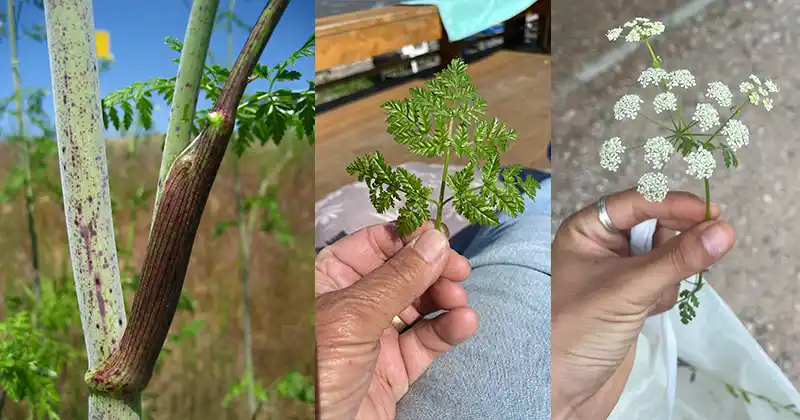
Poison hemlock may appear to be an ordinary wildflower, yet it ranks among the most toxic plants globally. This perilous weed is widespread in various regions across Europe, North America, and beyond, capable of causing death within hours from even a minuscule amount ingested. The risk is exacerbated by its resemblance to harmless plants like wild carrot, parsley, or parsnip. In this guide, you will learn how to identify poison hemlock, grasp why it poses a danger, and find out how to protect yourself and others from unintentional exposure.
❗ Why Is Poison Hemlock Dangerous?
Poison hemlock contains highly potent neurotoxins, specifically coniine and γ-coniceine. These substances disrupt the nervous system, particularly affecting the signals that regulate muscle control. Even a minuscule amount can lead to:
- Muscle tremors
- Loss of coordination
- Paralysis
- Respiratory failure
- Death
There is no antidote. Once symptoms manifest, immediate medical attention is crucial — often necessitating respiratory support since the lungs may cease function while the individual remains conscious.
🧠 Symptoms of Poisoning
Symptoms may arise between 30 minutes to 3 hours after exposure, depending on the method (ingestion, inhalation, or skin absorption) and quantity. Common indicators include:
- Burning sensation in the mouth or throat
- Nausea, vomiting, diarrhea
- Increased saliva and sweating
- Dilated pupils
- Muscle weakness and tremors
- Difficulty breathing
- Confusion, drowsiness
- Complete paralysis
- Death by asphyxiation
Children and pets are particularly at risk. Animals grazing in areas with hemlock might succumb unexpectedly.
🌿 How to Identify Poison Hemlock
Identifying this plant early is essential — and avoid any contact or ingestion. Here’s what to look for:
🔍 Leaf Characteristics:
- Finely divided and fern-like
- Similar to parsley or carrot leaves
- No hairs — both leaves and stems are smooth
- Bright green in hue
🌱 Stem Characteristics:
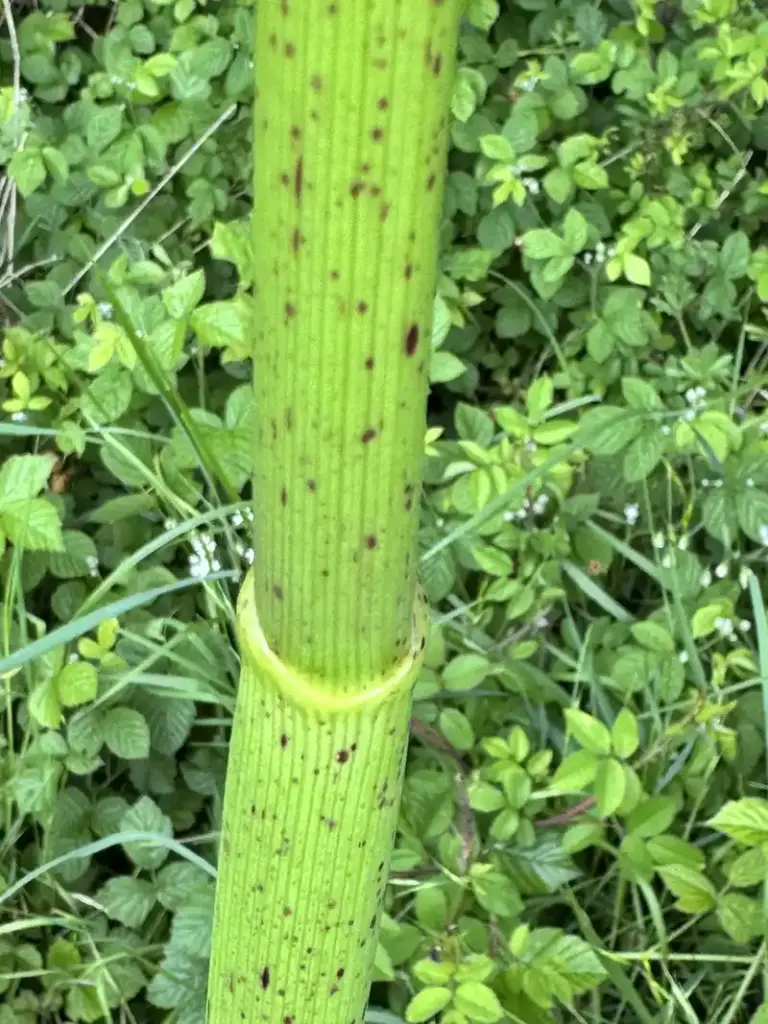
- Tall, hollow, smooth stem (can reach up to 2–3 meters)
- Purple or reddish blotches along the stem — a key warning sign
- Free of hair or fuzz
🌼 Flowers:
- Clusters of tiny white flowers arranged in umbrella-shaped formations (umbels)
- Bloom from late spring to summer
- Avoid the central dark flower (often found in wild carrot)
🧪 Smell:
- When crushed, the plant emits an unpleasant, musty odor, sometimes likened to mouse urine — in contrast to the fresh, carroty scent of safe lookalikes
⚠️ Lookalikes to Watch Out For
Poison hemlock is frequently confused with:
- Wild carrot (Daucus carota) – features hairy stems and a carrot-like aroma
- Queen Anne’s lace – typically possesses a tiny purple flower at its center
- Parsley – edible, but similar in leaf shape
- Fool’s parsley (Aethusa cynapium) – also toxic, though less harmful
- Parsnip greens – while edible, wild versions can resemble hemlock
Always assess the stem texture, aroma, and witness the presence of purple blotches.
🧤 Safety Tips: How to Protect Yourself
- Avoid touching unknown plants with bare hands
- Wear gloves and long sleeves when working around wild vegetation
- Do not consume any plant without 100% confirmation from an expert
- Avoid burning unfamiliar weeds — inhaling hemlock smoke may be harmful
- Educate children and others to steer clear of “wild parsley” or “wild carrots”
- If exposure is suspected, immediately seek emergency medical assistance
🚫 How Not to Handle It
- Do not forage solely based on appearance — many plants can look alike
- Avoid mowing or weed-whacking hemlock without full protective gear — sap can spray and enter cuts
- Never compost it — toxins can leach into the compost
- Do not burn it — toxic fumes can result in severe respiratory problems
✅ Final Tips
- Poison hemlock often thrives near ditches, riverbanks, roadsides, fields, and abandoned lots
- It is a biennial: leaves appear low to the ground in the first year, eventually producing tall stalks with flowers in the second
- If you encounter a tall plant with purple-spotted smooth stems and white umbrella flowers — keep your distance
⚠️ Disclaimer
This article is for informational purposes only and should not be considered medical or professional advice. We are not specialists in toxicology or plant identification. If you suspect that you or someone else may have encountered poison hemlock, contact emergency services immediately. Always consult with qualified experts before handling or foraging wild plants.
 By
By